WhatsApp Social Commerce
A concept I led inside Meta's New Product Experimentation (NPE) team: a trust and credibility layer for social commerce, built on the WhatsApp Business and Instagram Business APIs, designed with Nigeria as the proving ground and portability to other WhatsApp-first emerging markets as the goal.
Everything I built during my time on NPE is covered by a standard Meta NDA. This concept is the one I'm able to show in detail. The rest of what I worked on, and the internal research behind why we prioritized trust over discovery, stays confidential.
Commerce was already happening on WhatsApp. Trust wasn't.
WhatsApp didn't need to be taught commerce. In Nigeria, merchants were already running full storefronts through chat: catalogs as image dumps, orders closed in DMs, payment on trust or on delivery. The demand was already there. What was missing was a way for a shopper to know, before sending money into a stranger's chat, whether that vendor would actually deliver.
That gap is what New Product Experimentation (NPE) was there to test. Not "how do we bring commerce to WhatsApp," which was already happening organically, but "how do we make the commerce that's already happening there safe enough to scale." Trust, not discovery, was the constraint.
I owned the concept, and the cross-team collaboration it required.
As the PM on this concept inside NPE, I led product discovery and experimentation from the initial insight through to a working prototype: framing the problem, running research with local buyers and sellers, and defining what "credible" needed to mean in a market where most vendors have no storefront, no reviews, and no paper trail.
Because the concept sat directly on top of WhatsApp and Instagram, I brought in the WhatsApp Business and Instagram Business product teams early, alongside engineering, design, research, and data, and drove that collaboration rather than sitting inside it: setting the problem, pulling in the right teams at the right moments, and pushing what I was learning about trust and verification back to them so it didn't stay stuck in one concept.
The brief from leadership was to build for scale, not for one market. I chose Nigeria as the proving ground: if a trust layer could hold up under Nigeria's mix of high volume and high skepticism, it would generalize to other WhatsApp-first markets, rather than starting somewhere easier and hoping it would transfer.
"I didn't wait for a hand-off. I brought the WhatsApp Business and Instagram Business teams in myself, because the insight was only worth something if it moved with me across both platforms."
Finding a vendor you can trust, without leaving the chat
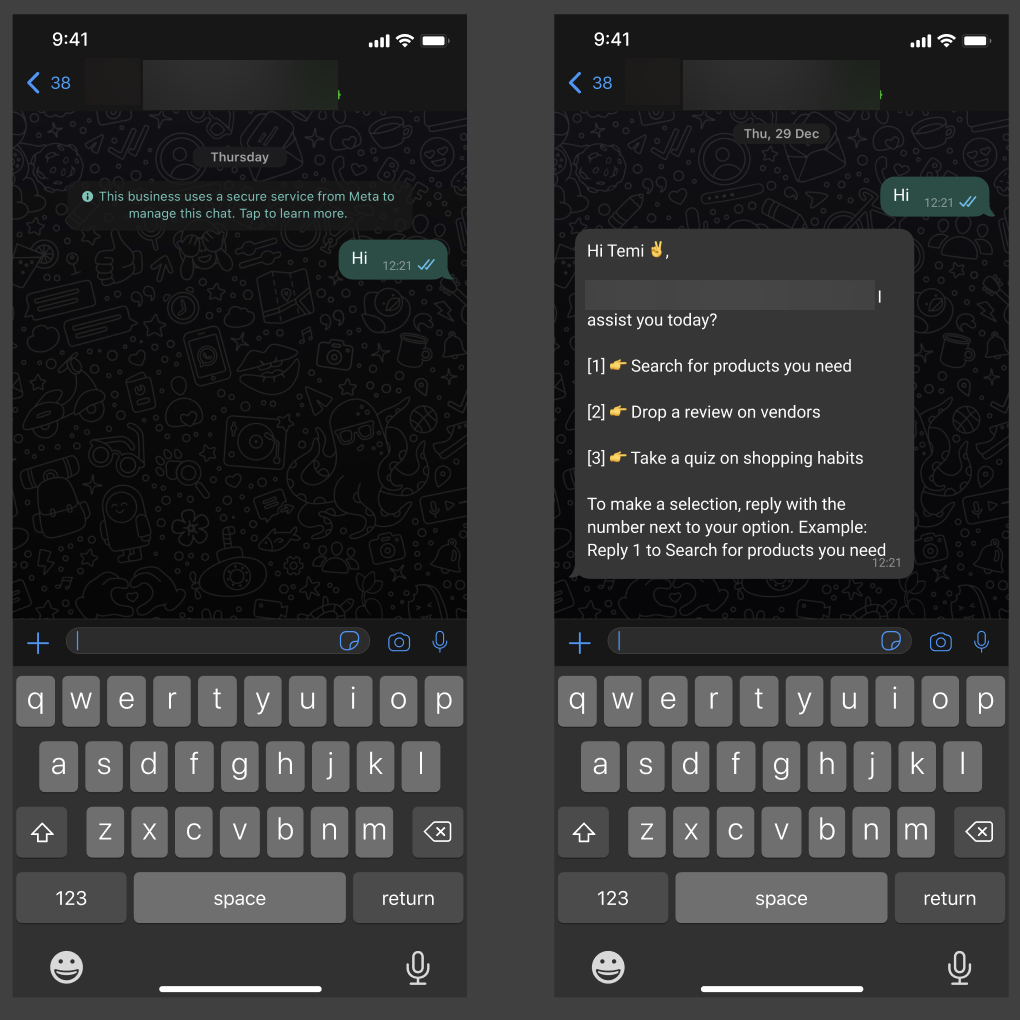
The shopper side had to work for someone who has never installed a shopping app and isn't going to start now. So the entire experience lives inside a WhatsApp chat with a personal shopper bot: search for a product, drop a review on a vendor you've bought from, or take a quick quiz on your shopping habits, all as numbered menu replies, the interaction pattern Nigerian WhatsApp users were already fluent in from customer service bots.
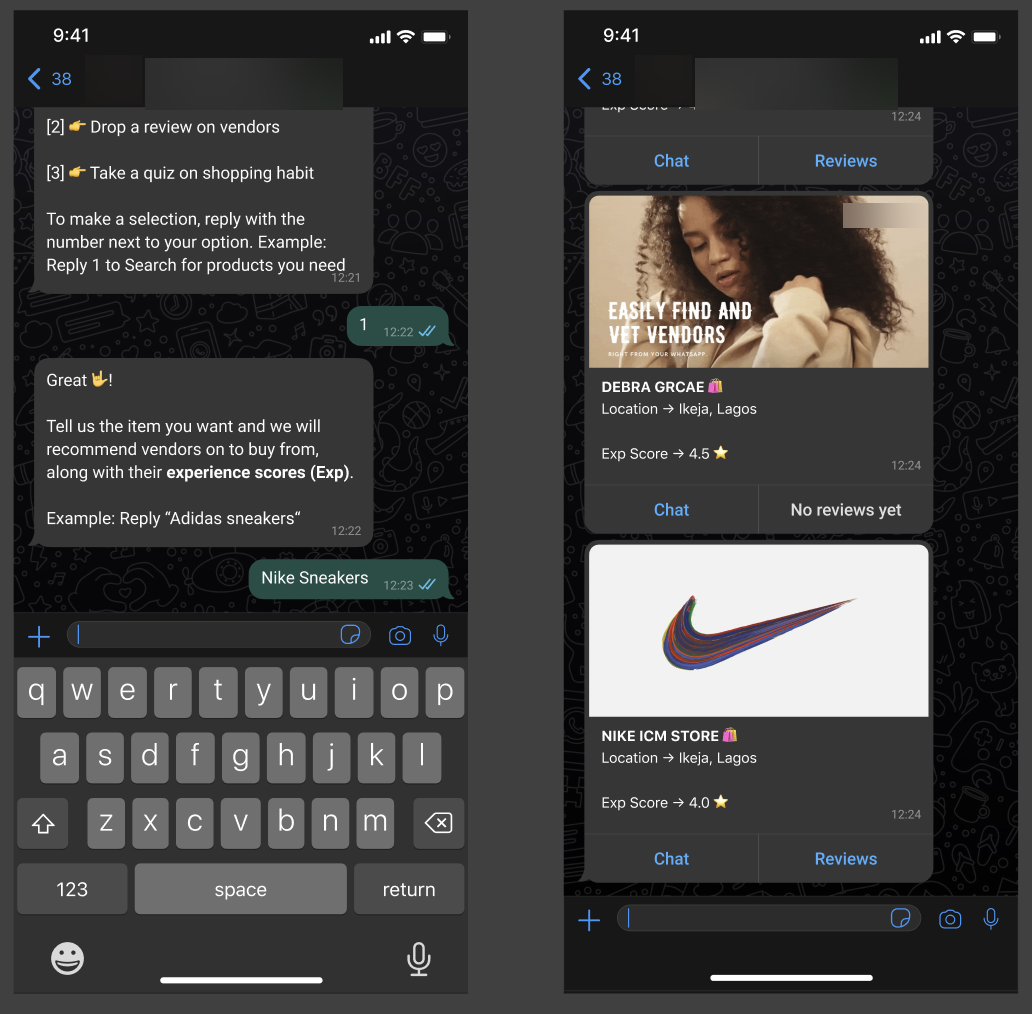
The core mechanic is the credibility layer. Ask for "Nike sneakers" and the bot doesn't return a generic product feed, it returns vendors ranked by an Exp Score — a single credibility rating built from verified purchase reviews, so a shopper can compare vendors at a glance instead of reading reviews one by one. Tap into a vendor and you get a full credibility breakdown: product quality, customer experience, and real reviews from named buyers, the same due diligence a shopper would do by asking a friend, done automatically before they hand over their money.
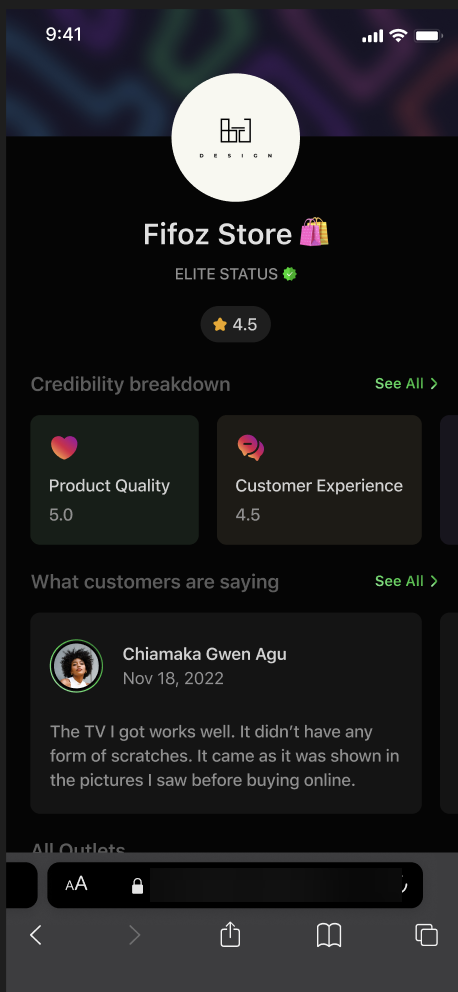
Verification as the price of being discoverable
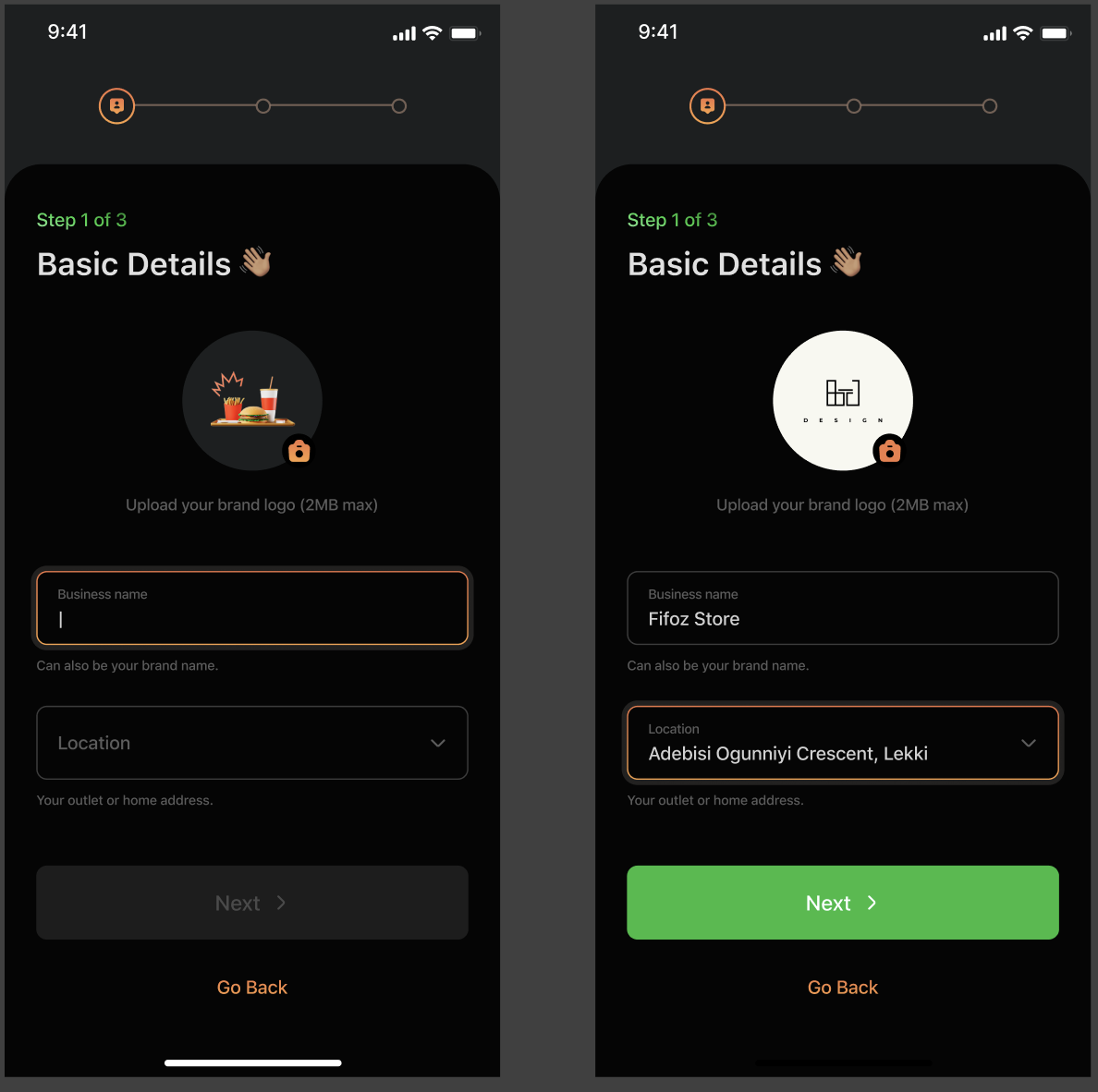
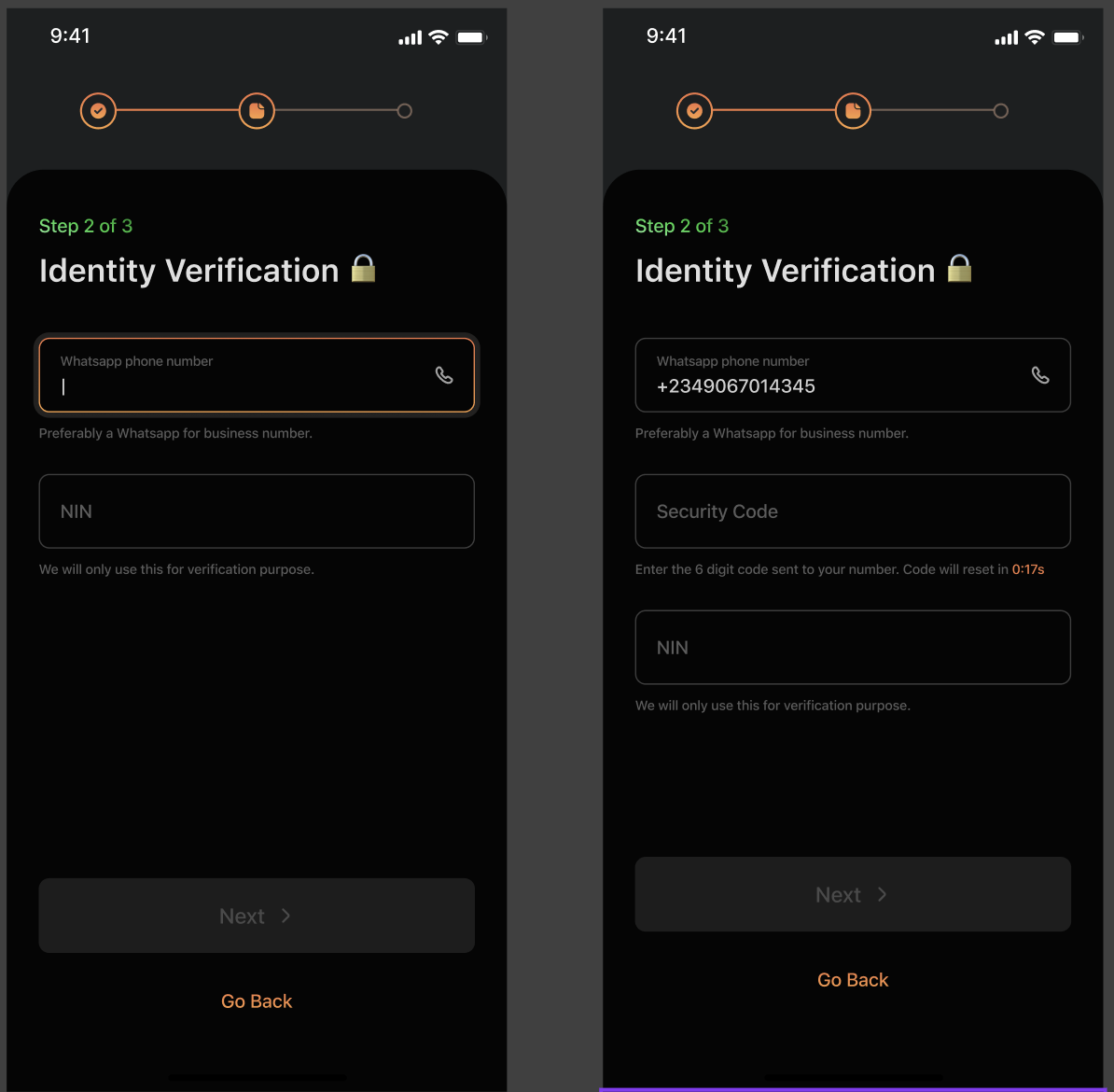
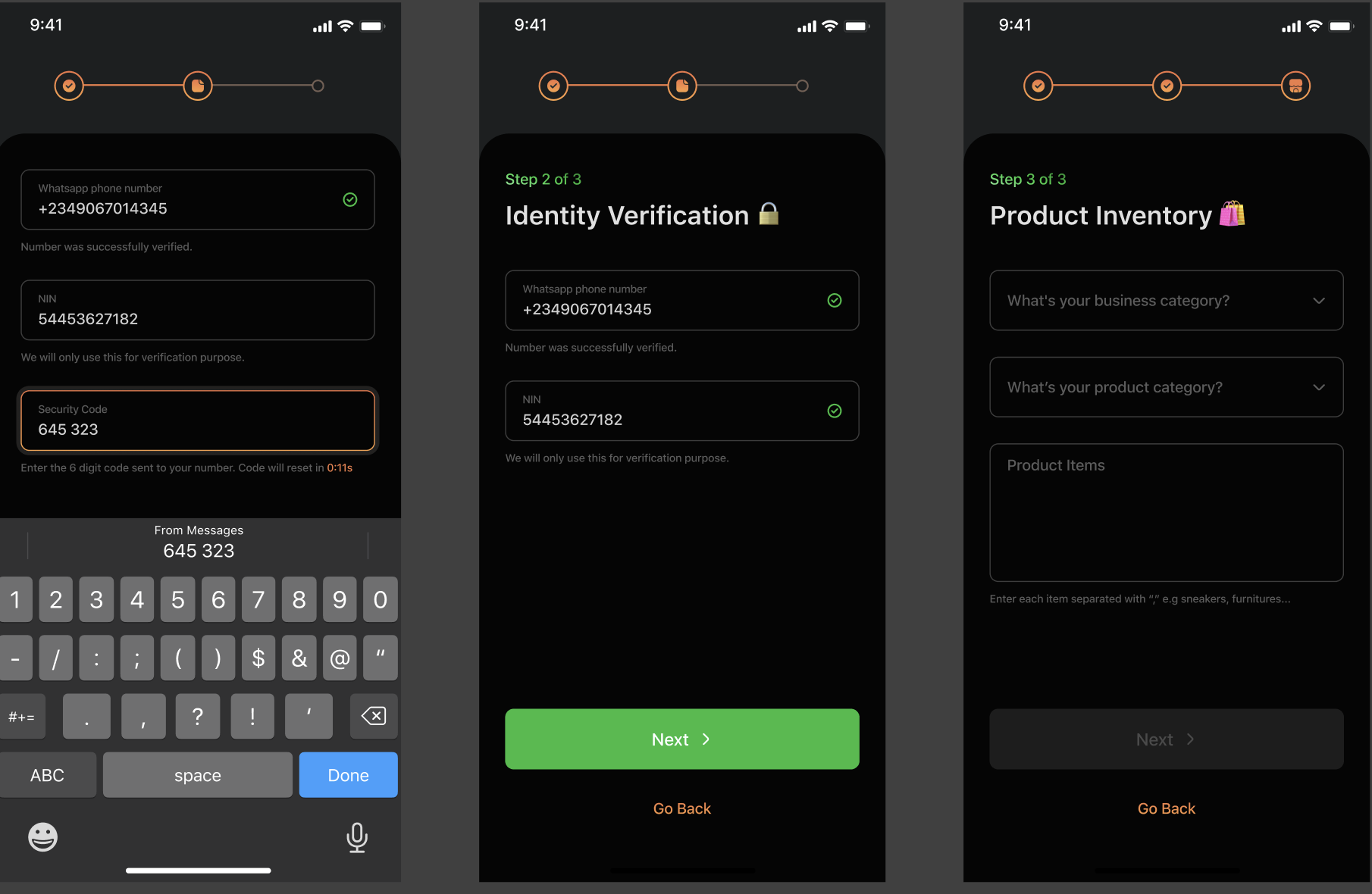
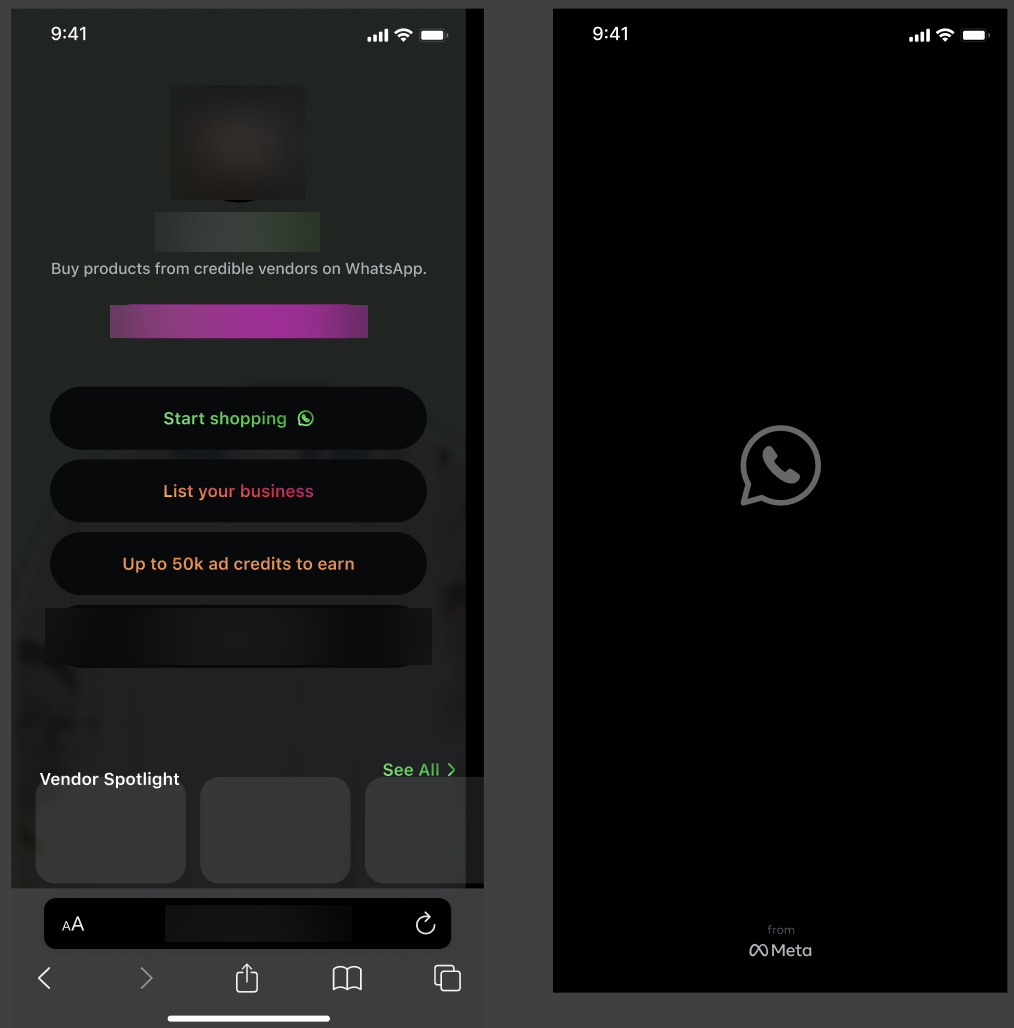
Credibility on the shopper side only works if it's earned on the vendor side. Onboarding is a three-step flow: business basics, identity verification, product inventory. Identity is the step that matters most: a WhatsApp Business number confirmed by a one-time code, plus a national ID, Nigeria's own system, since that's where I built and tested it, designed to swap in the equivalent ID for any new market rather than hard-coding one country in.
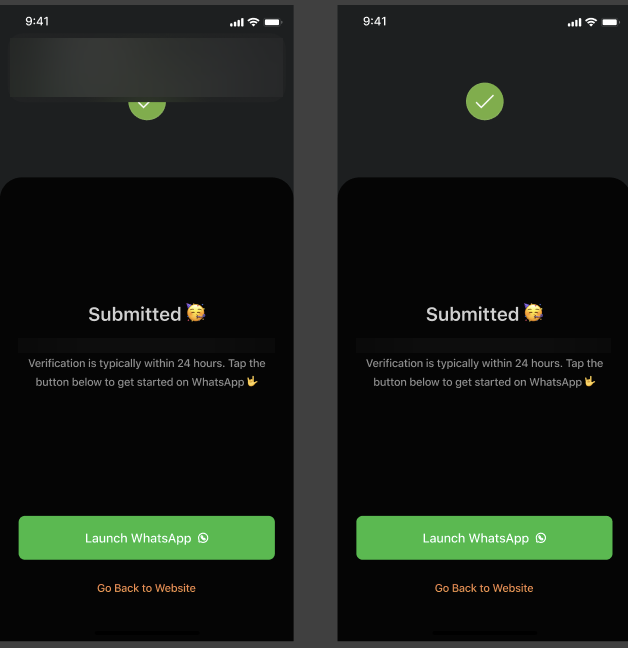
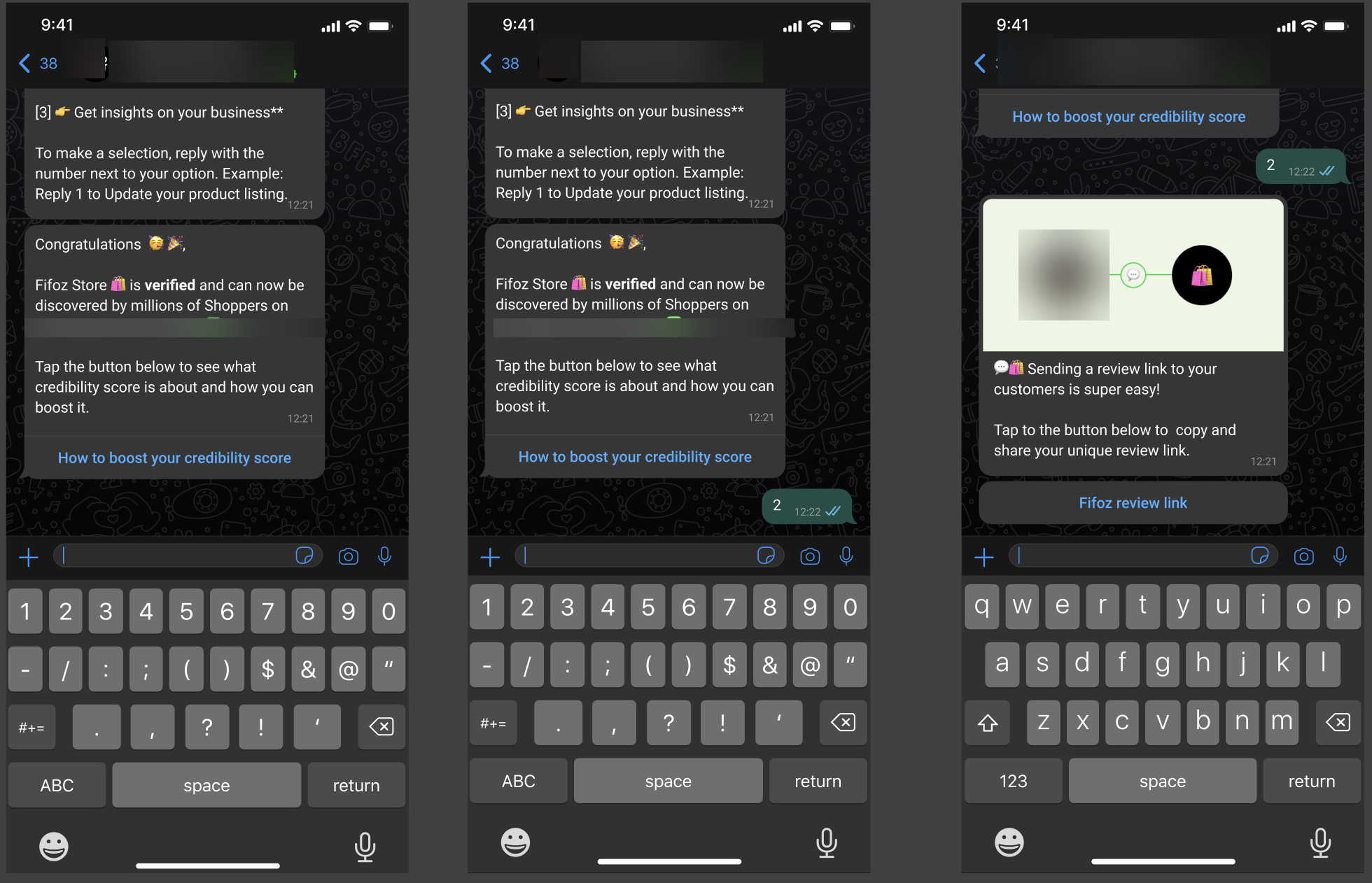
Once submitted, a vendor gets a WhatsApp confirmation, typically verified within 24 hours, and a "Congratulations" message the moment they go live, showing exactly how their credibility score works and how to raise it, plus a one-tap link to collect reviews from customers. Verification wasn't a gate we hid behind legal copy, it was a feature we sold vendors on: being verified is what made them discoverable to the millions of shoppers already on WhatsApp.